Which is the more valuable virtue; Certainty of our beliefs and perspectives, or, the courage to question our own opinions and willing adopt new understandings?
As a preacher I should be sure of what I believe right? I should be the one with the answers. But I don't. It frustrates me. Sometimes I can't make up my mind. I don't mean boxers or briefs by the way. I can't make up my mind about real issues.
Like music in worship. Sometimes it just seems like the traditional hymns do not speak a language that people understand; I mean, what is an 'ebenezer' and how do I raise it anyway? from the hymn 'Come Thou Fount of Every Blessing'
On the other hand, so much of modern worship music has no theological content. I don't mind if the music is simplistic, but most of these songs, understandable thought they are, don't communicate anything of value. I can't make up my mind.
Or a serious issue. Abortion. I was raised in a more biblically literal church in which abortion was always wrong. Just look at Jeremiah. God knew him while he was in the womb. Those who follow God should hinder the ongoing creation of God, ever.
Then I started to run in more 'liberal' circles, where we talked about women's rights, are pregnancy due to abusive 'relationships'. I changed my mind. But now it seems like we are doing theology more focused on 'human rights' than on the call of God, and I go back and forth, I can't make up my mind.
I just changed my mind again recently. Didn't even realize it. two conversations in a week on the same topic... two different opinions. Wasn't trying to be political for my own gain, or play games with people. I really just couldn't seem to decide where I was.
Should have been silent.
Which is the connection with my Lenten Prayer Discipline.
1 Corinthians 2.16:
‘For who has known the mind of the Lord
so as to instruct him?’
But we have the mind of Christ.
I pray the Divine Office so that I can seek the mind of Christ. that is hope anyway. I'm just not as certain as Paul seems about the whole thing.
Seeking the mind of Christ means quieting my own mind, and the more I think of it, my mouth too.
Prayer as time to have my mind changed. Prayer as time to wait and listen for wisdom that just might change my opinion, my perspective. If I only get around to prayer when I have time, or when I am frightened or frustrated, might have a purpose. But I'm not sure that prayer changes me. Paul seems to think we will have the mind of Christ. That takes time, patience, silence, and a willingness to change.
Showing posts with label Prayer. Show all posts
Showing posts with label Prayer. Show all posts
Friday, March 05, 2010

Saturday, February 27, 2010
Lenten Discipline Update 4
Praying the Divine Office is a bit more of a challenge that one might expect. As I previously posted, I have added to the Divine Office short readings from C.S. Lewis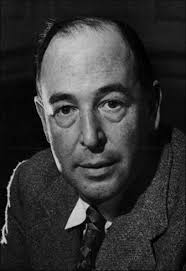 and Henri Nouwen
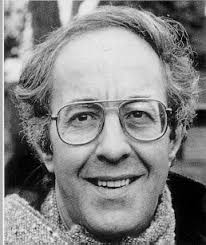 . I am finding the Nouwen readings especially fulfilling, as he reflects on prayer. It's still the time factor. as I've said before, the prayers of the Office seem to go by too quickly. But its not really the Office, its me. It is a struggle to slow the mind, (insert here any 'isn't your mind already slow enough' jokes). Seeking silence and time for contemplation takes planning and requires making choices. I have to choose not to do other things in order to take the time to pray and reflect. But there are so many other things to be done, that I have found myself charging through the Office to get back to doing other things.
I am reminded of the work of a good friend, mentor and colleague Kirk Jones and his pastoral theological work on this issue which resulted in two books, 'Rest in the Storm and Addicted to Hurry.'
It is, no doubt, important to get things done, regardless of our careers, vocations or callings. But especially as disciples of Christ in a complex society, it is also important to etch out moments of reflection so as to clearly discern exactly what it is that must be done so as to best serve Christ and bring Glory to God. I may very well be repeating myself with this post. But this is apparently what I must learn, this lent, to slow down and listen.
this morning I read this from Nouwen's work entitled 'Prayer Embraces the World'; 'To pray is to unite ourselves with Jesus and lift up the whole world through him to God in a cry for forgiveness, reconciliation, healing, and mercy. TO pray, therefore, is to connect whatever human struggle or pain we encounter - whether starvation , torture, displacement of peoples, or any form of physical or mental anguish -- with the gentle and humble heart of Jesus.'
I suppose this encapsulates my hesitation about the very popular 'Missional Church' movements and some of its proponents who suggest that worship is less important than active service. This point of view seems to be falling into our cultures desire for hurry, action, busyness. While a faith that remains inactive and cerebral is certainly offensive to the Christ who called us to take up a cross, I fear that the action of the 'church' will be in vain if it is not rooted in worship, prayer, study and discernment.
and Henri Nouwen. I am finding the Nouwen readings especially fulfilling, as he reflects on prayer. It's still the time factor. as I've said before, the prayers of the Office seem to go by too quickly. But its not really the Office, its me. It is a struggle to slow the mind, (insert here any 'isn't your mind already slow enough' jokes). Seeking silence and time for contemplation takes planning and requires making choices. I have to choose not to do other things in order to take the time to pray and reflect. But there are so many other things to be done, that I have found myself charging through the Office to get back to doing other things. I am reminded of the work of a good friend, mentor and colleague Kirk Jones
and his pastoral theological work on this issue which resulted in two books, 'Rest in the Storm and Addicted to Hurry.' It is, no doubt, important to get things done, regardless of our careers, vocations or callings. But especially as disciples of Christ in a complex society, it is also important to etch out moments of reflection so as to clearly discern exactly what it is that must be done so as to best serve Christ and bring Glory to God. I may very well be repeating myself with this post. But this is apparently what I must learn, this lent, to slow down and listen.
this morning I read this from Nouwen's work entitled 'Prayer Embraces the World'; 'To pray is to unite ourselves with Jesus and lift up the whole world through him to God in a cry for forgiveness, reconciliation, healing, and mercy. TO pray, therefore, is to connect whatever human struggle or pain we encounter - whether starvation , torture, displacement of peoples, or any form of physical or mental anguish -- with the gentle and humble heart of Jesus.'
I suppose this encapsulates my hesitation about the very popular 'Missional Church' movements and some of its proponents who suggest that worship is less important than active service. This point of view seems to be falling into our cultures desire for hurry, action, busyness. While a faith that remains inactive and cerebral is certainly offensive to the Christ who called us to take up a cross, I fear that the action of the 'church' will be in vain if it is not rooted in worship, prayer, study and discernment.
Tuesday, February 23, 2010
Lenten Disciplines 3
Quick update today. Lot's to do.
Yesterday I mentioned the fact that the Divine Office seemed to go by too quickly.
So this morning I slowed down, sang the responses to the readings. At the end of the morning, noon and afternoon office are two prayers, one the prayer for the week and one the closing prayer. In between the two I inserted brief devotional readings. I found a daily devotional book on the writings of C.S.Lewis, so I read that. I also have a book of various brief excepts of the writings of Henri Nouwen. I think I will carry that around with the Divine Office and insert a brief reading in my practice throughout the day. They are not long, but Nouwen is always good. This morning's excerpt was about prayer. 'If we live a prayerful life, then there is a growing desire to spend more time with God and God alone... the desire to pray and to spend time with God and god alone is always growing.'
Which reminds me that my work is not just labor for a paycheck, but prayer in and of itself. The studying and writing, planning, listening, study and preparing I do, are all forms of prayer. Launching into work without a time of silence and contemplation leads me to just see this as labor. Beginning with prayer reminds me that it is all a form of prayer. Perhaps I won't way this well, but instead of rushing to an end result for my labors; a sermon, a lesson, a plan, I can slowly savor these things as prayerful connection to God.
read this Nouwen quote for the noon prayers and thought I'd share; ' Spiritual disciplines are not ways to eradicate all our desires but ways to order them so that they can serve one another and together serve God. --Bread for the Journey
Yesterday I mentioned the fact that the Divine Office seemed to go by too quickly.
So this morning I slowed down, sang the responses to the readings. At the end of the morning, noon and afternoon office are two prayers, one the prayer for the week and one the closing prayer. In between the two I inserted brief devotional readings. I found a daily devotional book on the writings of C.S.Lewis, so I read that. I also have a book of various brief excepts of the writings of Henri Nouwen. I think I will carry that around with the Divine Office and insert a brief reading in my practice throughout the day. They are not long, but Nouwen is always good. This morning's excerpt was about prayer. 'If we live a prayerful life, then there is a growing desire to spend more time with God and God alone... the desire to pray and to spend time with God and god alone is always growing.'
Which reminds me that my work is not just labor for a paycheck, but prayer in and of itself. The studying and writing, planning, listening, study and preparing I do, are all forms of prayer. Launching into work without a time of silence and contemplation leads me to just see this as labor. Beginning with prayer reminds me that it is all a form of prayer. Perhaps I won't way this well, but instead of rushing to an end result for my labors; a sermon, a lesson, a plan, I can slowly savor these things as prayerful connection to God.
read this Nouwen quote for the noon prayers and thought I'd share; ' Spiritual disciplines are not ways to eradicate all our desires but ways to order them so that they can serve one another and together serve God. --Bread for the Journey
Monday, February 22, 2010
Lenten Practices Update 2
So, for Lent I am cutting back on tv viewing, praying The Divine Office
The weekend wasn't so bad. I'm finding I don't miss television all that much. It's just second nature to turn it on, so after I turn it on without thinking, I turn it off and read. I joked with my friend theobilly on the phone today that I gave up television for lent, but am spending more time on the internet. He replied that this was like giving up beer for lent only to start drinking wine.
Somewhat more seriously, praying the hours has been more challenging than I expected. It seems a bit anti-climactic to stop what I am doing to go through these very brief prayers. it seems like there should be more. I just settle my racing mind into the moment and it is over, the prayers are said and I don't feel like I was present for the moment. I think I am reading them, and I tend to read fast. So i started singing the prayers as Phyllis Tickle suggests in her brief introduction. At first it feels funny, but I do slow down. some. I find myself singing too quickly too. and this is perhaps the lesson I am meant to learn... to slow down.Or the practice I meant to begin, slowing down, my reading, my thinking, my doing. I was just extolling the virtues of contemplation and discernment to a church member the other day, who did not feel effective or active enough.
It is a tough lesson to learn, that sometimes we serve God and others best not by a knee-jerk action, but by quietly listening, thinking, praying and learning so that when we act we act effectively and for the glory of God. Guess I need to learn it better myself. If we learn anything from the recent news about the mid-west baptists involvement in haiti it is that acting without learning leads to more harm than good

I am reminded of a line from Tolkien, 'Not all those who wander are lost.' I suppose I fear that i am loosing time for important actions if I wander in prayer. Wandering might not be such a bad thing though.
The weekend wasn't so bad. I'm finding I don't miss television all that much. It's just second nature to turn it on, so after I turn it on without thinking, I turn it off and read. I joked with my friend theobilly on the phone today that I gave up television for lent, but am spending more time on the internet. He replied that this was like giving up beer for lent only to start drinking wine.
Somewhat more seriously, praying the hours has been more challenging than I expected. It seems a bit anti-climactic to stop what I am doing to go through these very brief prayers. it seems like there should be more. I just settle my racing mind into the moment and it is over, the prayers are said and I don't feel like I was present for the moment. I think I am reading them, and I tend to read fast. So i started singing the prayers as Phyllis Tickle suggests in her brief introduction. At first it feels funny, but I do slow down. some. I find myself singing too quickly too. and this is perhaps the lesson I am meant to learn... to slow down.Or the practice I meant to begin, slowing down, my reading, my thinking, my doing. I was just extolling the virtues of contemplation and discernment to a church member the other day, who did not feel effective or active enough.
It is a tough lesson to learn, that sometimes we serve God and others best not by a knee-jerk action, but by quietly listening, thinking, praying and learning so that when we act we act effectively and for the glory of God. Guess I need to learn it better myself. If we learn anything from the recent news about the mid-west baptists involvement in haiti it is that acting without learning leads to more harm than good
I am reminded of a line from Tolkien, 'Not all those who wander are lost.' I suppose I fear that i am loosing time for important actions if I wander in prayer. Wandering might not be such a bad thing though.
Saturday, February 20, 2010
My Lent Discipline Update
Quick review of my Lenten disciplines:
Discipline One: Cut back on TV. Not bad. Bit of a challenge with the Olympics on. I received some new books in the mail yesterday and so they distracted me.
1. Apostle to the Conquered: Reimaging Paul's Mission by Davina C. Lopez
2. Postmodernism, or, the Logic of Late Capitalism by Fredric Jameson
3. Up to our Steeples in Politics by Will Campbell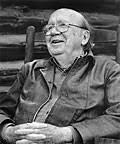
4. Consuming Faith: Integrating Who We are with What we Buy by Tom Beaudoin
I'm starting a thursday night bible study on Paul soon and so I dove right into the Lopez work. Already she has provided much to consider. Lopez does her theology and exegesis from the margins of feminist, queer and post-colonial theory. So I am learning much about those perspectives. So far she has spent a great deal of time discussing the coins, statues, and other various works of art of the ROman period and its political and theological implications. Her point, in the end, is to go back to Paul's use of the self-descriptive phrase 'apostle to the nations' to argue that when Paul used that word 'nations' or 'ethne' his context was wider that simply 'non-jewish' which traditional exegesis and scholarship has assumed. Instead, 'ethne' was a political term to all who were less than the Romans. Should be interesting.
Back to Practices. So I found myself very at peace having no television, or very little yesterday, just a few moments at lunch and after dinner. Amazing how little there really is on. I turned it on before starting this post, and began my usual flip through the channels, then, amazing, just gave it up as a waste of time.
Praying the Hours has been rushed at some points. Attended a lecture in Cambridge by Luis CdeBaca on 'the Fight to Abolish Modern Day Slavery'
Two interesting points, at least for me, in the lecture. One, Ambassador CdeBaca suggested some ways in which everyone could combat modern slavery; by buying cotton shirts not assembled in sweatshops, buying food not harvested by slave labor and... this was the best... buying free trade chocolate. I've dropped the chocolate line as a way to combat slavery in two recent sermons, so to hear the Ambassador mention it was affirming. Second point. Ambassador CdeBaca was asked what efforts his office was putting into combatting the sex trade in South Africa due to the upcoming World Cup Events, he replied that he was enlisting the power of the pulpit, connecting to churches and clergy in South Africa to combat the demand side of prostitution and slavery.
The lecture was interesting, but it came right at the time when I needed to be doing the vespers prayers. I did them before the lecture, in a crowded and noisy room which was not ideal. Friday's prayers were always a bit behind because I spent the day visiting the saints of the church. But I got them all in and they kept me focused all day.
Memorizing the 63rd Psalm is going ok. I've got the first three verses pretty firmly ensconced for now. It takes repetition. The phrase of the psalm, earnestly I seek you, is a constant prayer for me throughout the day. How can I seek God in the minims, the details, the normal events of my life.
Now, it is time to pray
Discipline One: Cut back on TV. Not bad. Bit of a challenge with the Olympics on. I received some new books in the mail yesterday and so they distracted me.
1. Apostle to the Conquered: Reimaging Paul's Mission by Davina C. Lopez
2. Postmodernism, or, the Logic of Late Capitalism by Fredric Jameson
3. Up to our Steeples in Politics by Will Campbell
4. Consuming Faith: Integrating Who We are with What we Buy by Tom Beaudoin
I'm starting a thursday night bible study on Paul soon and so I dove right into the Lopez work. Already she has provided much to consider. Lopez does her theology and exegesis from the margins of feminist, queer and post-colonial theory. So I am learning much about those perspectives. So far she has spent a great deal of time discussing the coins, statues, and other various works of art of the ROman period and its political and theological implications. Her point, in the end, is to go back to Paul's use of the self-descriptive phrase 'apostle to the nations' to argue that when Paul used that word 'nations' or 'ethne' his context was wider that simply 'non-jewish' which traditional exegesis and scholarship has assumed. Instead, 'ethne' was a political term to all who were less than the Romans. Should be interesting.
Back to Practices. So I found myself very at peace having no television, or very little yesterday, just a few moments at lunch and after dinner. Amazing how little there really is on. I turned it on before starting this post, and began my usual flip through the channels, then, amazing, just gave it up as a waste of time.
Praying the Hours has been rushed at some points. Attended a lecture in Cambridge by Luis CdeBaca on 'the Fight to Abolish Modern Day Slavery'
Two interesting points, at least for me, in the lecture. One, Ambassador CdeBaca suggested some ways in which everyone could combat modern slavery; by buying cotton shirts not assembled in sweatshops, buying food not harvested by slave labor and... this was the best... buying free trade chocolate. I've dropped the chocolate line as a way to combat slavery in two recent sermons, so to hear the Ambassador mention it was affirming. Second point. Ambassador CdeBaca was asked what efforts his office was putting into combatting the sex trade in South Africa due to the upcoming World Cup Events, he replied that he was enlisting the power of the pulpit, connecting to churches and clergy in South Africa to combat the demand side of prostitution and slavery.
The lecture was interesting, but it came right at the time when I needed to be doing the vespers prayers. I did them before the lecture, in a crowded and noisy room which was not ideal. Friday's prayers were always a bit behind because I spent the day visiting the saints of the church. But I got them all in and they kept me focused all day.
Memorizing the 63rd Psalm is going ok. I've got the first three verses pretty firmly ensconced for now. It takes repetition. The phrase of the psalm, earnestly I seek you, is a constant prayer for me throughout the day. How can I seek God in the minims, the details, the normal events of my life.
Now, it is time to pray
Thursday, February 18, 2010
Lent, Ashes, and Figure Skating

Last night was the annual Ash Wednesday service at the church. I've tried some non-traditional things in this service, like have people come forward to plant seeds, in the hopes of symbolizing the new growth that lenten practices of prayer, study and sacrifice can bring. Last night we went fairly traditional with the imposition of ashes and partaking in communion.
I'm trying a couple of things for lenten practice, because personal discipline, as in structure, is not my strong suit. For instance, while some must finish a book that they have started before they move on, I get a little bored and move on... so that right now I think I have 5 books going. Sticking through on a plan isn't my strongest suit. So lent has always been a challenge because adding a practice or taking away a habit for 40 days really requires sticking to your plan.
So here is my plan... we'll see how it goes.
My Lenten sermon series is entitle 'God at the Center' and the first thing I will ask the congregation to do is make a map of their life patterns by answering questions about their priorities(which will lead to a discussion about who our gods really are you see); what can't they live without, what do they look forward to most, where do they spend the most time, money, energy. I did this mapping myself and was ashamed at how much time I spent in front of the TV. So I'm giving myself 1 hr of tv time a day. I think. Yeah, 1 hr. see, I'm wavering already. I'll watch TV just for the sake of watching TV. I'll watch a fishing show, and I have no interest in fishing shows, before I'll turn it off. terrible habit.
Second, I've had in my possession Phyllis Tickles 'The Divine Hours' a prayerbook for praying the Divine Hours, for years. I've used it now and again, on and off, occasionally. So for lent I am going to carry the sprintime volume with me wherever I go and follow its prayers throughout the day.
Finally I am going to work on memorizing scripture. My mom taught me to do this when I was little. I'm teaching my boys now. My Dad and I were watching the Olympics the other night, figure skating, which I don't think is a sport really, but that is a post for another time. Anyway, he remarked at how amazing it was that the skaters could remember such intricate routines. I replied that memory is like a muscle, the more you use is the stronger it gets, the less the weaker. The hypocrisy of my statement hit me. I'm not exercising my memory. Those of you who know me know that exercise isn't my favorite thing anyway. So I'm memorizing Ps 63 right now.
There you have it; cut down on TV, pray the hours, memorize Ps 63.
What are you going to do for Lent?
If you are hesitant to do anything, PLEASE read this post over at Talk With the Preacher. I met this pastor while at St. Charles Ave. Baptist Church in NOLA and this Ash Wednesday reflection is one of the most beautiful pieces I have read. I wish I'd written it and know you will enjoy. My only complaint about her blog is that she doesn't write more.
Wishing a Blessed Lent to my two faithful readers!
Monday, June 02, 2008
Thoughts on the Lord's Prayer
A few weeks ago I was asked to lead a round-table discussion on worship in the American Baptist Tradition (in Rhode Island, I suppose.) I expected a vigorous debate between those who advocated traditional worship (music) and those who were trying contemporary forms of worship (music.) There was some good respectful discussion on these topics, but i was not shocked or challenged by it. What surprised me was the apparent number of churches that are leaving behind the recitation of the Lord's Prayer in the sunday morning liturgy. 'They don't understand what they are saying, so why keep saying it,' seemed to be the collective reasoning behind this decision. In fairness, this discussion only happened in one hour, so unfortunately we could not reach great dept in our conversation.
I am concerned with transition which leaves behind tradition for three reasons.
First I wonder if we need to 'understand' the Lords Prayer for it to be an important part of our worship? I am reminded of something that I C.S. Lewis once wrote (I cannot remember where) about liturgy. I am paraphrasing the thought here, of a much more sophisticated thinker than I. But I believe he suggested was that one of the strengths of a liturgy, was that we didn't have to think to be a part. the liturgy would be the spirit praying for us when we did not know what words to pray ourselves. this is my experience of the Lord's Prayer. Personally given to bouts of depression and anxiety, intercessory prayer, where I 'talk' to God, can cause a case of sever fixation and intrusive thoughts that made me feel worse instead of better. Should prayer always make me feel better? No, but for me, this experience didn't allow conviction that leads to action. Just futher depression. I pray the Lord's Prayer in this situation, because it calm my mind and body, allows me to fix my mind and heart on something outside myself (my anxieties) and allows me to move into prayer where I can talk without 'spinning' or listen for and to God.
Second, if people don't understand it, why not explain it? I still lead the Lord's Prayer in worship at the church I am blessed to serve. I have noted that even slowing down my recitation, which many people do tend to listen too, helps get people out of a mindless recitation and into a mindful recitation. Other versions of the Lord's prayer, that remain faithful to the spirit and intent, but which change the language is another way that we can lead people into a more mindful recitation of the Prayer. I fear leaving behind things that people don't understand. It seems to me that Sabbath has been severly misunderstood in our culture for some time and now it has become an antiquated idea that many do not know about or understand. Instead of growing silent and allowing the Lord's prayer to become extinct, why not teach and preach it?
Third, I am increasingly convinced that the Lord's Prayer is as much a manifesto of Kingdom Ethics as it is simply a prayer. Hallowed be Thy name reminding us of our ultimate allegiance to the Kingdom of God as we negotiate our modern world. Thy Kingdom come, Thy will be done, reminding us that our politics are oriented toward the Kingdom as presented by the life of Christ, instead of democrat, republican, conservative or liberal. Forgive us our debts, reminds us of Sabbath/jubilee economics, Give us this day our daily bread, the gospel present in concrete acts of compassion and service. Here is a summation of what the Kingdom of God is meant to look like and act like. If we stop reciting this prayer, will we forget who we are and why we do what we do as a church? This is my worry.
I am concerned with transition which leaves behind tradition for three reasons.
First I wonder if we need to 'understand' the Lords Prayer for it to be an important part of our worship? I am reminded of something that I C.S. Lewis once wrote (I cannot remember where) about liturgy. I am paraphrasing the thought here, of a much more sophisticated thinker than I. But I believe he suggested was that one of the strengths of a liturgy, was that we didn't have to think to be a part. the liturgy would be the spirit praying for us when we did not know what words to pray ourselves. this is my experience of the Lord's Prayer. Personally given to bouts of depression and anxiety, intercessory prayer, where I 'talk' to God, can cause a case of sever fixation and intrusive thoughts that made me feel worse instead of better. Should prayer always make me feel better? No, but for me, this experience didn't allow conviction that leads to action. Just futher depression. I pray the Lord's Prayer in this situation, because it calm my mind and body, allows me to fix my mind and heart on something outside myself (my anxieties) and allows me to move into prayer where I can talk without 'spinning' or listen for and to God.
Second, if people don't understand it, why not explain it? I still lead the Lord's Prayer in worship at the church I am blessed to serve. I have noted that even slowing down my recitation, which many people do tend to listen too, helps get people out of a mindless recitation and into a mindful recitation. Other versions of the Lord's prayer, that remain faithful to the spirit and intent, but which change the language is another way that we can lead people into a more mindful recitation of the Prayer. I fear leaving behind things that people don't understand. It seems to me that Sabbath has been severly misunderstood in our culture for some time and now it has become an antiquated idea that many do not know about or understand. Instead of growing silent and allowing the Lord's prayer to become extinct, why not teach and preach it?
Third, I am increasingly convinced that the Lord's Prayer is as much a manifesto of Kingdom Ethics as it is simply a prayer. Hallowed be Thy name reminding us of our ultimate allegiance to the Kingdom of God as we negotiate our modern world. Thy Kingdom come, Thy will be done, reminding us that our politics are oriented toward the Kingdom as presented by the life of Christ, instead of democrat, republican, conservative or liberal. Forgive us our debts, reminds us of Sabbath/jubilee economics, Give us this day our daily bread, the gospel present in concrete acts of compassion and service. Here is a summation of what the Kingdom of God is meant to look like and act like. If we stop reciting this prayer, will we forget who we are and why we do what we do as a church? This is my worry.
Subscribe to:
Posts (Atom)